
The Origins of Sargassum: From the Sargasso Sea to the Great Atlantic Sargassum Belt
When Christopher Columbus crossed the Atlantic in 1492, one of the things that surprised him most was an immense floating meadow of brown algae. That place became known as the Sargasso Sea, named after the seaweed that covered it: Sargassum. Great Atlantic Sargassum Belt is the name given to this huge floating belt of sargassum that now stretches across the Atlantic.
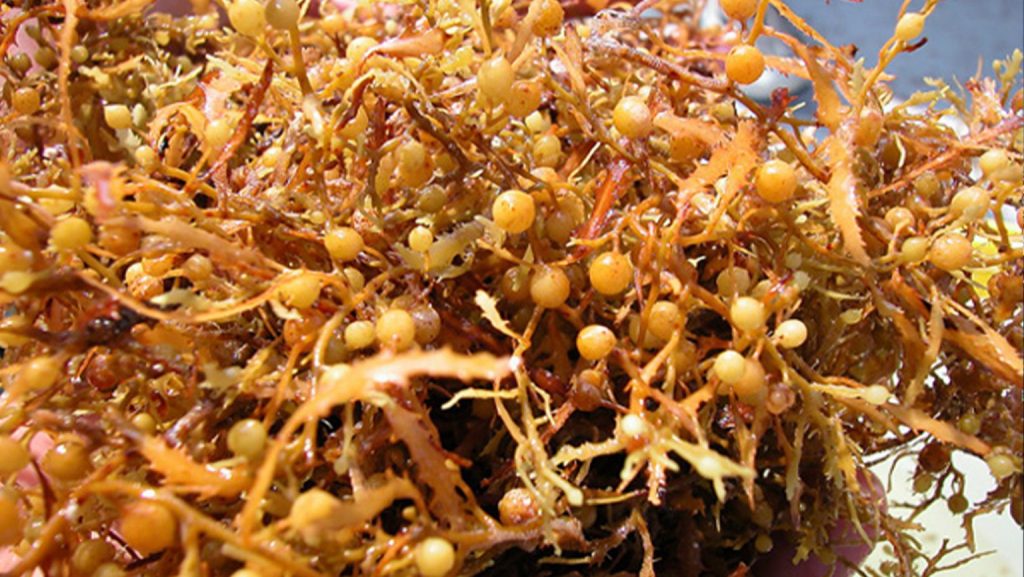
Close-up of Sargassum natans showing the air bladders that allow it to float on the ocean surface.
For centuries everything stayed in balance.
The two main species — Sargassum natans and Sargassum fluitans — lived in a well-defined area of the northern Atlantic, kept afloat by their small air-filled bladders.
Great atlantic sargassum belt is a massive phenomenon that has dramatically changed the Caribbean coastline since 2011. What started as a surprising event has now become an annual challenge for beaches across the Riviera Maya, including Playa del Carmen.
Everything changed in 2011.
Great atlantic sargassum belt
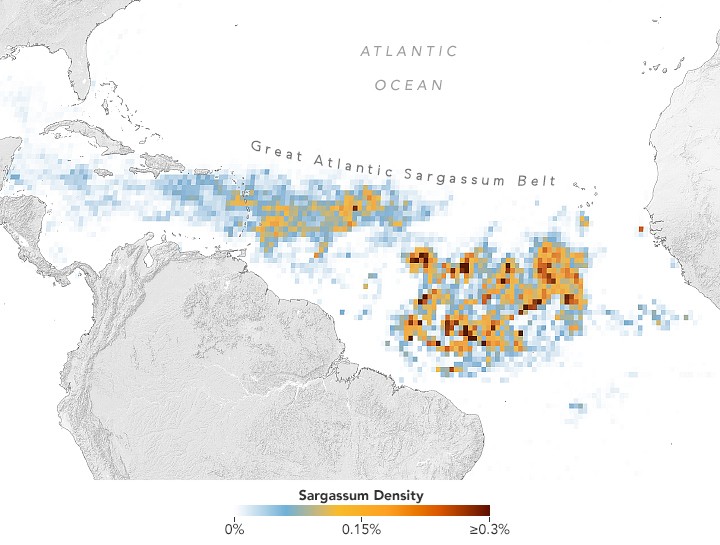
Satellite view of the Great Atlantic Sargassum Belt stretching from West Africa to the Caribbean and Gulf of Mexico.
(Image: NASA Earth Observatory).
From that year onward, what scientists now call the Great Atlantic Sargassum Belt was born — a giant band of sargassum stretching more than 8,000 kilometers, from the west coast of Africa all the way to the Gulf of Mexico. At its peak, it has reached over 20 million tons of biomass.
But what triggered this explosion?
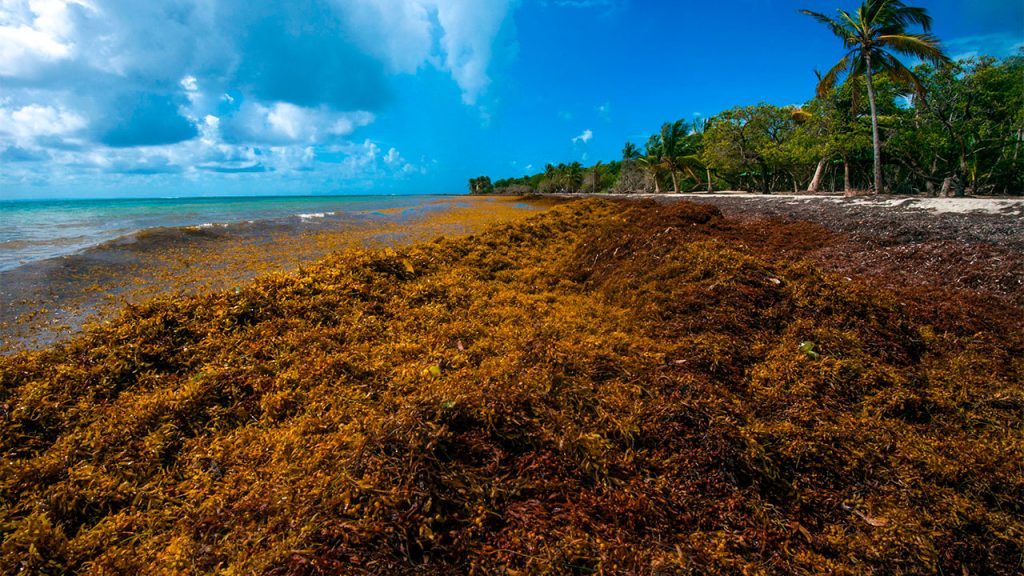
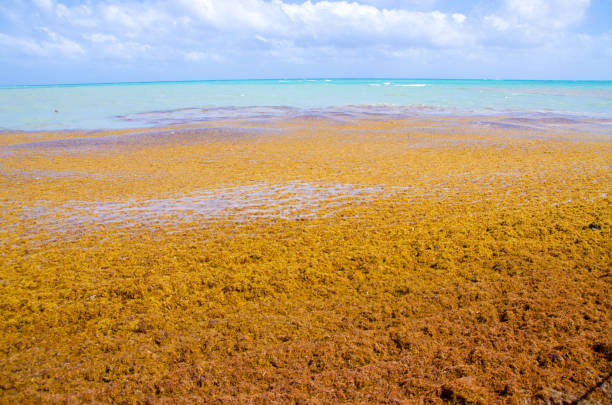
Sargassum completely covering the beach along the Caribbean coast.
The main cause appears to be an extreme climatic event between 2009 and 2010:
A very strong negative phase of the North Atlantic Oscillation (NAO), the most intense recorded since 1900. This shifted the winds southward and pushed large amounts of sargassum out of their historical habitat into the warmer, nutrient-rich tropical Atlantic waters.
Once there, the algae found perfect conditions: Plenty of sunlight, warm water, and especially a surplus of nutrients coming from upwelling along the west coast of Africa and the massive discharge from the Amazon River.
If you want a deeper scientific explanation of the Great Atlantic Sargassum Belt and how it was formed, I highly recommend this excellent resource.